Neurocare Clinic — Dr Neeraj Kumar, Senior Consultant Neurologist

Home / Services / Neurological Dysfunction

Neurological Dysfunction

Assessment of weakness, numbness, imbalance and other nervous system issues.

Consultation fee from

₹1200

Set by your chosen doctor's profile

Book an Appointment
Neurological Dysfunction
Comprehensive Clinical Neurology

Neurological Dysfunction Assessment & Care

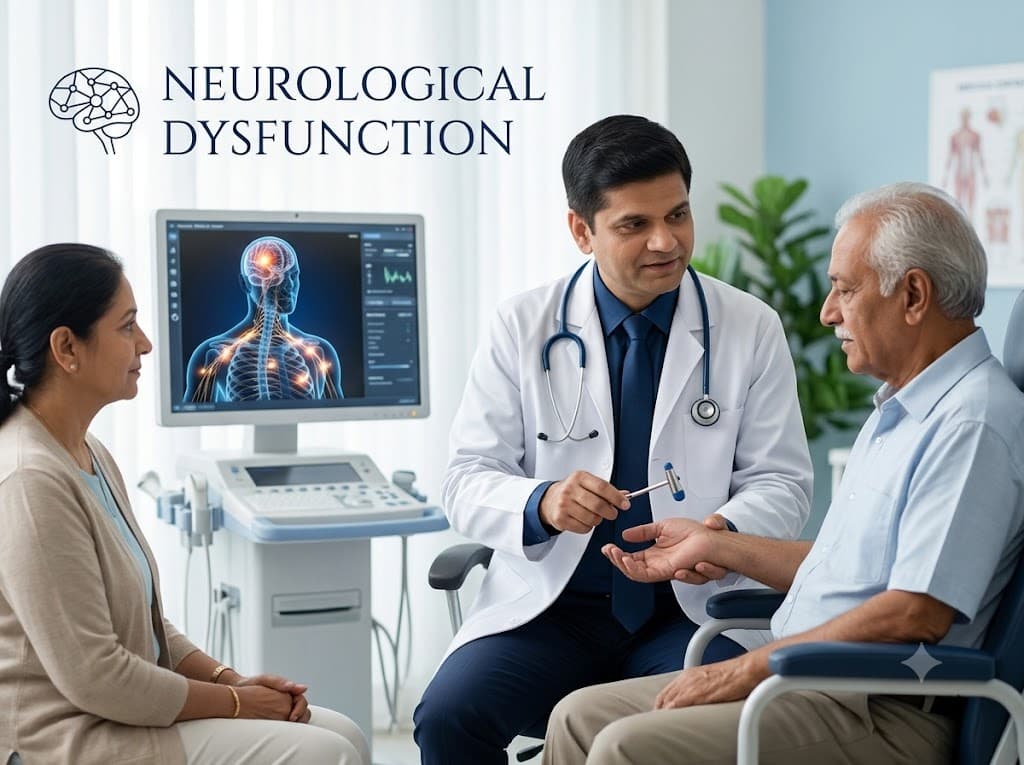
Detailed clinical diagnosis, neuro-electrophysiological mapping, and targeted management for motor weakness, sensory changes, coordination loss, and systemic nerve impairment[cite: 1].

Dr. Neeraj Kumar

MBBS, MD (General Medicine), DM (Neurology)

Senior Consultant Neurologist • Neurocare Clinic[cite: 1]

Book an Appointment

Understanding Neurological Dysfunction

Neurological dysfunction encompasses a spectrum of disruptions where the brain, spinal cord, or peripheral nerves fail to transmit signals accurately[cite: 1]. Rather than a single disease, it manifests as functional failure across motor, sensory, autonomic, or cognitive domains—often appearing as progressive muscle weakness, unsteadiness, numbness, or loss of coordination[cite: 1].

Because neurological signs frequently overlap across vascular, metabolic, neurodegenerative, and post-viral etiologies, a structured clinical workup is crucial to identify whether the dysfunction originates centrally (brain and spinal cord) or peripherally (nerves and neuromuscular junctions)[cite: 1].

Common Patterns of Neurological Dysfunction

Motor Weakness & Fatigue

Unilateral or bilateral limb weakness, difficulty lifting objects or climbing stairs, muscular twitching (fasciculations), and early muscle fatigue[cite: 1].

Sensory Impairments

Numbness, abnormal tingling (paresthesias), reduced temperature sensitivity, or sharp neuralgic pain across extremities or trunk segments[cite: 1].

Ataxia & Imbalance

Gait unsteadiness, frequent stumbles, loss of spatial body awareness (proprioception deficits), and cerebellar coordination failure[cite: 1].

Autonomic & Cranial Dysfunction

Orthostatic lightheadedness, abnormal perspiration patterns, facial asymmetry, speech slurring, and swallowing difficulties.

Diagnostic & Therapeutic Modalities

  • Neuro-Electrophysiology: Detailed EMG, Nerve Conduction Studies (NCS), and Evoked Potentials to evaluate electrical conduction integrity across peripheral and central pathways.
  • Advanced Neuro-Imaging: Multi-sequence MRI/CT scans of the brain and entire spine to rule out ischemia, demyelination plaques, compressive lesions, or cord edema.
  • Etiology-Specific Medical Therapy: Targeted neuro-protective agents, immunomodulators, metabolic correction, and neuropathic stabilizers to halt underlying neural decline.
  • Neuro-Rehabilitation: Tailored balance training, occupational retraining, and functional physical therapy to rebuild motor pathways and maximize functional independence.

When to Seek Emergency Medical Attention

Seek immediate emergency clinical care if neurological dysfunction develops suddenly—including acute weakness of the face, arm, or leg, sudden speech difficulty, double vision, acute bladder/bowel incontinence, or rapidly progressing weakness traveling up the limbs.

Consult Dr. Neeraj Kumar at Neurocare Clinic

Schedule a comprehensive neurological assessment to identify the root cause of your symptoms[cite: 1].

Book Now

Get In Touch

Have a Question? We're Here to Help!

Call us or WhatsApp us to book your consultation with Dr Neeraj Kumar.

Monday–Saturday: 6:00 PM–8:00 PM

Sunday: Closed